Evaluating a commercial photography portfolio isn't as straightforward as it looks. Here's what to actually pay attention to before you commit.
You’ve pulled up three or four photographer websites. The portfolios all look decent. The pricing is vague. The bios all say something about “passion for storytelling.” And now you’re supposed to make a decision that will directly affect how your brand looks to customers, clients, and partners.
It’s a harder call than it should be — because most portfolios are curated to impress, not to inform. What you actually need to know is whether this photographer can handle your specific project, under your specific conditions, and deliver images you’ll genuinely put to use. Here’s how to think through it.
A strong commercial photography portfolio isn’t about volume. Industry professionals generally recommend 20 to 30 carefully selected images — enough to show range, not so many that the weak ones start to drag down the strong ones. What matters more than quantity is whether the work demonstrates consistent technical quality across different subjects, lighting conditions, and environments.
Look for variety that’s intentional, not random. A photographer who can shoot a polished product image in a studio, pivot to an on-location industrial facility, and then deliver a food shot that actually makes you hungry — that’s someone with real range. If every image in a portfolio looks like it was shot in the same setting with the same light, that’s a signal worth paying attention to.
Food photography is one of the most technically demanding specialties in commercial work, and it’s also one of the most commonly underestimated. The difference between a food image that drives orders and one that gets scrolled past comes down to a combination of timing, lighting, and an understanding of how food actually behaves in front of a camera.
Ingredients don’t wait. A beautifully plated dish has a narrow window — sometimes minutes — before it starts to lose its peak appearance. A commercial food photographer who’s done this work knows how to move fast without cutting corners on quality. That means pre-planning the shot, understanding the lighting setup before the food arrives, and working closely with the chef or food stylist to make sure every element reads correctly on camera.
Lighting for food is its own discipline. The goal isn’t just to illuminate the dish — it’s to capture texture, depth, and color in a way that translates accurately to print, digital menus, and social media. A burger needs to look like it has weight. A sauce needs to look glossy without looking wet. These are technical decisions that require both experience and an eye for how the final image will actually be used.
Harris County’s restaurant market is one of the most competitive in the country. With the city’s multicultural population driving an extraordinarily diverse food scene — from the Energy Corridor to the neighborhoods along the Katy Freeway — restaurants that invest in quality food photography aren’t just making their menus look better. They’re making a direct case to customers who are comparing options in a search result or scrolling through Instagram at 7 p.m. deciding where to eat. The images either do that job or they don’t.
We’ve shot food for Harris County restaurants and food manufacturers who understand this. The brief is always the same: make it look like it tastes. The execution is where the experience shows.
There’s a practical problem that comes up when businesses source photography and video separately: the two rarely feel like they belong to the same brand. Different vendors, different visual styles, different color grades — and suddenly your website, your social media, and your video content look like they came from three different companies.
The case for working with a single source for both still photography and videography isn’t just about convenience. It’s about consistency. When one photographer is responsible for both the still images and the motion content, the visual language stays unified. The lighting approach carries over. The framing decisions reflect the same understanding of your brand. That coherence is something audiences notice, even if they can’t name it.
We offer still photography, videography, and aerial drone work under one roof. For commercial clients in Harris County who need a full set of visual assets — facility overviews, product content, team imagery, video walkthroughs — that means one conversation, one creative direction, and one set of files delivered in the formats you actually need.
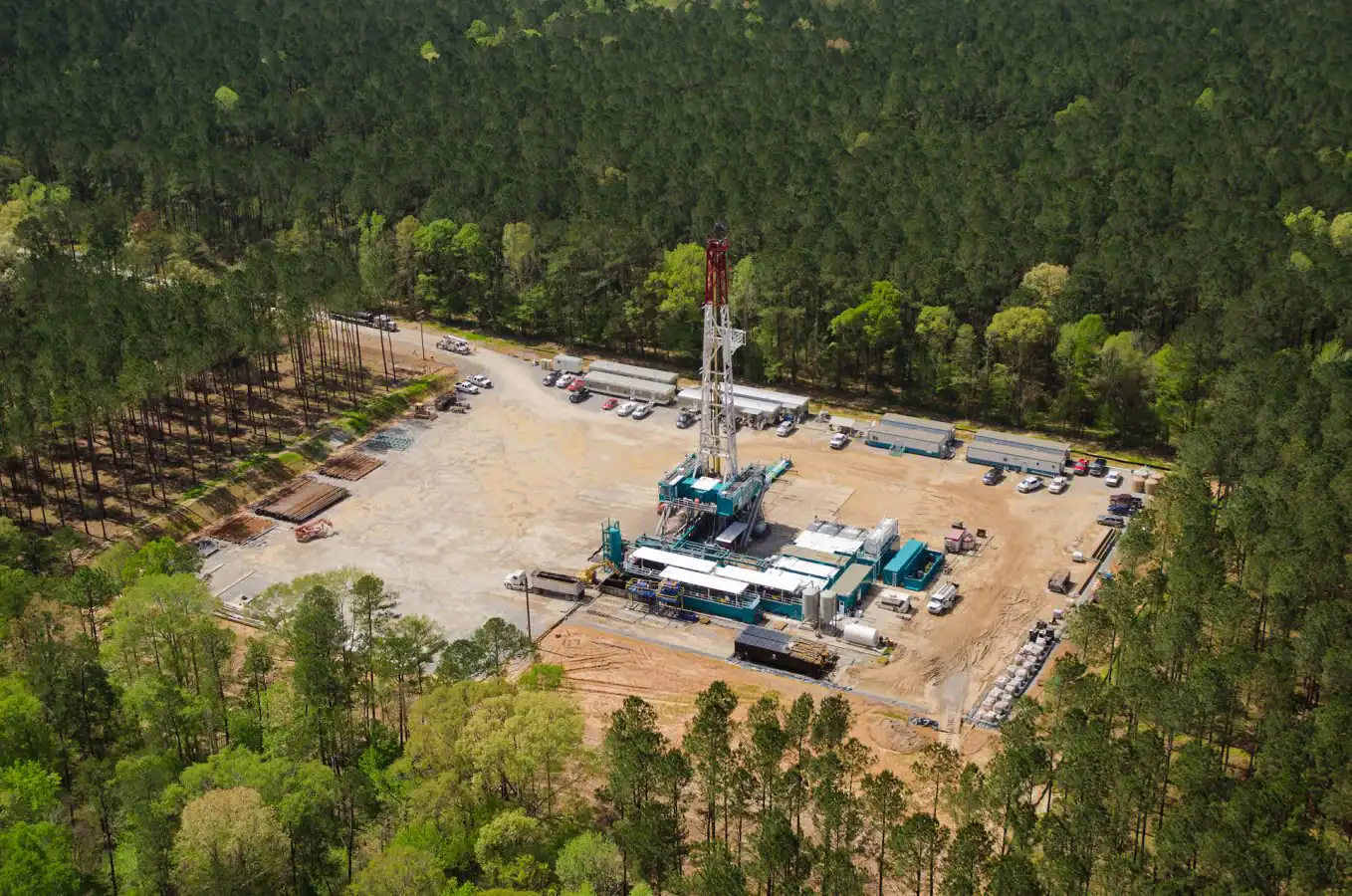
Aerial drone work adds a dimension that’s become increasingly relevant for industrial clients, real estate, and construction documentation. Harris County’s energy sector, the Port of Houston, and the commercial real estate corridors stretching from downtown out to Katy all have projects where an aerial perspective isn’t just useful — it’s the only way to show the full scope of what’s happening on the ground. When drone work is part of the same project as ground-level photography and video, the result is a cohesive visual story rather than a patchwork of assets from different shoots.
The logistics are simpler, too. One scheduling conversation. One set of deliverables. One photographer who already understands your project by the time the drone goes up.
Want live answers?
Connect with a Joe Robbins Photography expert for fast, friendly support.
The portfolio gets you in the door, but it shouldn’t be the only thing you’re evaluating. A photographer’s process — how they communicate before the shoot, how they handle on-location challenges, how they manage delivery and turnaround — tells you just as much about what your experience will be like as the images themselves.
Ask what happens before the shoot. A photographer who asks about your brand, your intended use for the images, and any potential challenges at the location is a photographer who’s already thinking about your project the way you need them to. One who just asks for the date and address is not.

Credentials in commercial photography aren’t just resume items — they’re signals about how a photographer operates, what standards they hold themselves to, and whether they’ve been vetted by anyone other than themselves.
ASMP membership is one of the most meaningful. The American Society of Media Photographers is the foremost professional organization for commercial photographers in the United States, with nearly 7,000 members. ASMP publishes the industry’s standard reference on professional business practices — covering pricing, licensing, usage rights, and ethics. A photographer who’s been a member for decades and served in a leadership role within the organization has been operating at a professional standard long before it was convenient to claim one.
Formal education matters, too, particularly when it’s specific to commercial photography rather than a general arts background. And teaching experience — actually standing in front of college students and explaining why every technical decision matters — is a form of peer validation that a portfolio alone can’t replicate. If someone has been teaching photography at the college level for over two decades, their expertise has been tested in a way that goes beyond client reviews.
We’ve been operating since 1974 and established our studio in Harris County in 1984. We’ve worked through every shift this industry has seen — from film to digital, from print campaigns to social media, from single-format projects to the multi-asset deliverables that today’s marketing teams expect. That’s not about being established. It’s about having solved problems you haven’t encountered yet.
For buyers in Harris County who are evaluating photographers for the first time or rebuilding a vendor relationship that didn’t work out, these are the markers worth looking for. Not the flashiest website or the most followers — the verifiable record of doing this work, at a professional level, for a long time.
**How many images should be in a commercial photography portfolio?** Somewhere between 20 and 30 is the professional standard. Enough to show you can handle different subjects, lighting conditions, and environments — not so many that the portfolio becomes a scroll through every shoot the photographer has ever done. If a portfolio has hundreds of images and no clear organization by specialty, that’s worth noting. It usually means the photographer is hoping something lands rather than curating work that demonstrates consistent quality.
**Does it matter whether the photographer has shot my specific industry?** It matters more than most people realize. A photographer who has documented industrial facilities along the Houston Ship Channel understands the safety protocols, the lighting challenges of large interior spaces, and the framing decisions that make machinery look purposeful rather than chaotic. A photographer who has shot food for Harris County restaurants knows how to work fast, collaborate with kitchen staff, and deliver images that hold up across a menu, a website, and a social feed. Relevant experience isn’t a nice-to-have — it’s what separates images that work from images that technically exist.
**What’s the difference between studio and on-location commercial photography?** Studio work gives you controlled conditions — predictable light, no weather variables, full control over the environment. On-location work brings the camera to where your business actually operates, which is often more authentic and more logistically complex. The best commercial photographers can do both without compromising quality in either setting. For Harris County businesses that need facility documentation, team photography at a corporate office, or food shots in an actual restaurant kitchen, on-location capability isn’t optional — it’s the whole job.
**How long does it take to get images back after a shoot?** Turnaround depends on the scope of the project, but a week is a reasonable standard for most commercial work. If you’re working toward a campaign launch, a menu rollout, or a website update with a hard deadline, that should be part of the conversation before the shoot is scheduled — not a surprise afterward. A photographer who can’t give you a clear delivery timeline before you book is one who hasn’t thought through the back end of the process.
**Do I really need custom photography, or can I use stock images?** Stock photography has its place, but it has a ceiling. It’s generic by design — the same image is available to every competitor in your space. Custom commercial photography gives you images that are exclusively yours, built around your brand, your product, and your market. In a city as competitive as Houston, where businesses across every sector are fighting for the same customers, that visual differentiation is real. Stock images look like stock images. Custom work looks like you.
The goal of a commercial photography portfolio isn’t to impress you — it’s to answer a question: can this photographer handle what I need, and will the images actually work for my business? When you evaluate a portfolio with that lens, the difference between technically competent work and genuinely useful work becomes a lot clearer.
Experience, credentials, range, and process all matter. So does the photographer’s ability to communicate before the shoot, adapt on-location, and deliver images that fit the way you actually plan to use them.
If you’re a business in Harris County looking for a commercial photographer with five decades of experience, ASMP credentials, and the capability to handle still photography, videography, and aerial drone work under one roof, we’re worth a conversation.
Summary:
Article details: