Learn which professional tools commercial photographers rely on to capture iconic brand imagery that drives business results and elevates visual marketing.
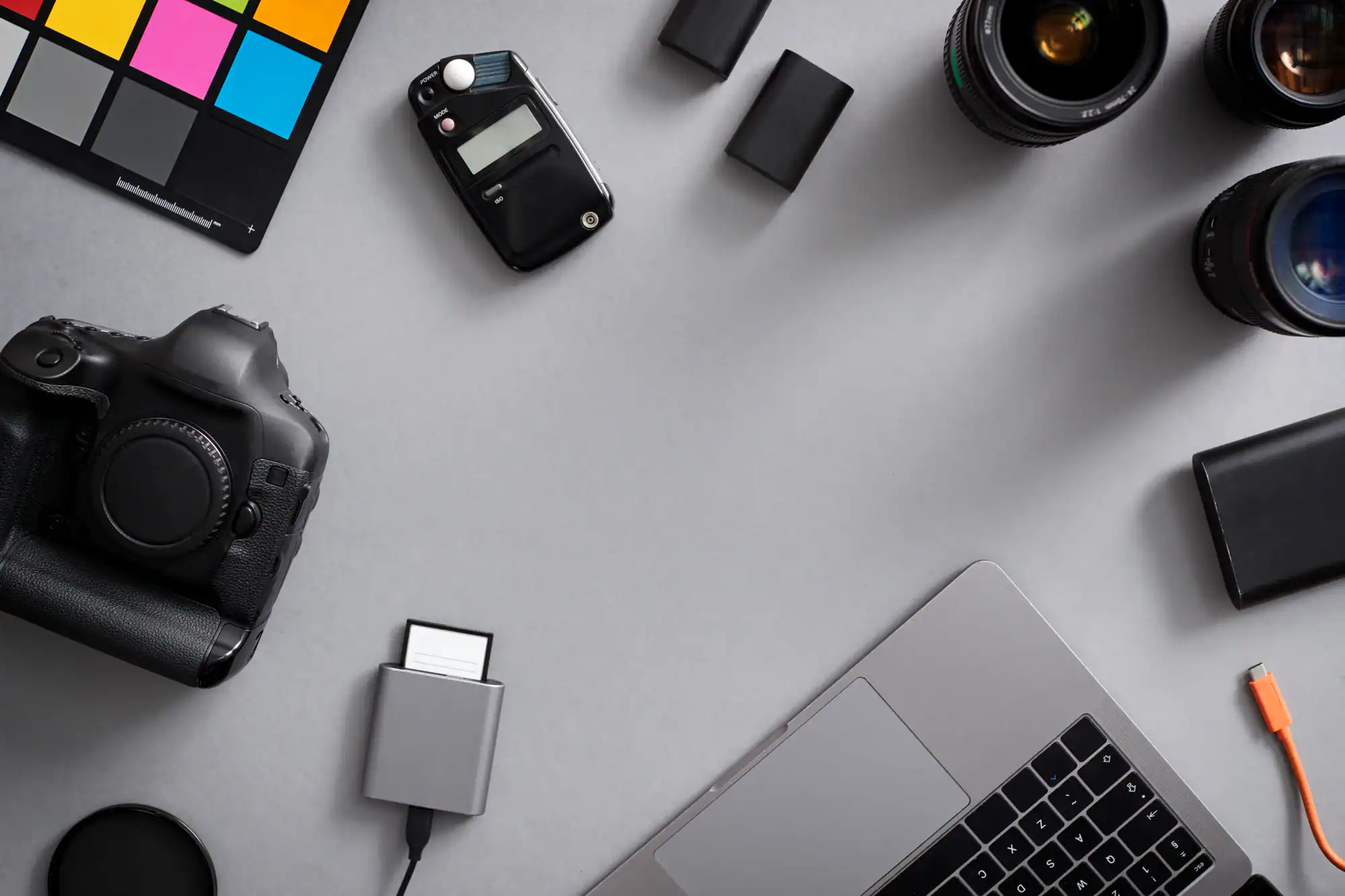
The camera body forms the foundation of every commercial shoot. We use either high-end DSLR or mirrorless camera systems—both capable of producing exceptional results, but each with distinct advantages for different business needs.
Mirrorless cameras have become increasingly popular in commercial work because they’re lighter, offer real-time exposure previews, and feature advanced autofocus systems that track subjects with precision. Full-frame sensors deliver superior performance in challenging lighting conditions, which matters when we’re shooting in a warehouse, a restaurant, or an executive office in Harris County, TX where we can’t always control the environment.
The camera itself is just the starting point. What really matters is having a system that delivers consistent, professional-grade images regardless of the situation your business requires.

When you’re creating images for billboards along I-10, website headers, or print campaigns, resolution isn’t negotiable. We work with cameras featuring sensors of 24 megapixels or higher—often much higher—because clients need flexibility in how they use images across different marketing channels.
A high-resolution file means your marketing team can crop in on details without losing quality. It means the same image works for both a social media post and a full-page magazine ad. That versatility saves businesses money and gives creative teams more options when deadlines are tight.
Full-frame sensors also provide better dynamic range, which translates to more detail in both shadows and highlights. When we’re photographing a product with reflective surfaces or capturing architectural details in mixed lighting, that extra dynamic range is the difference between a usable image and one that requires extensive post-production fixes that delay your campaign launch.
Sensor performance in low-light situations matters too. Corporate events, restaurant interiors, and industrial facilities often have less-than-ideal lighting. A professional camera system handles these challenges without introducing grain or noise that makes images look amateurish. You’re paying for equipment that performs consistently across diverse shooting conditions, not just in perfect studio light.
The investment in professional-grade camera bodies also means durability. These systems are weather-sealed, built to withstand frequent use, and designed for photographers who shoot multiple times per week. When we show up with professional equipment, you’re seeing someone who’s committed to delivering reliable results, not experimenting with consumer gear that might fail during your important shoot.
Camera bodies get attention, but lenses do the actual work of creating the image. We maintain a collection of lenses because different situations demand different tools. A 50mm prime lens excels at portraits and product shots with beautiful background blur. A 24-70mm zoom lens handles everything from wide environmental shots to tighter product details. Macro lenses capture intricate details for jewelry, electronics, or any product where texture and craftsmanship sell the value.
The quality of the glass matters as much as the focal length. Professional lenses feature superior optical construction that minimizes distortion, controls chromatic aberration, and delivers edge-to-edge sharpness. When you’re photographing products for e-commerce or creating brand imagery that will be scrutinized on large displays, lens quality shows up immediately in ways your customers notice.
Fast apertures (like f/1.8 or f/2.8) give us creative control over depth of field and perform better in low light. This matters when shooting in real-world business environments where we can’t always add supplemental lighting. A corporate headshot with a beautifully blurred background happens because of lens choice and technique, not post-production tricks that waste time and money.
Wide-angle lenses in the 16-35mm range are essential for architectural and interior photography. They capture entire spaces while minimizing distortion—critical when photographing office environments, retail locations, or manufacturing facilities across the Houston area. These lenses help businesses showcase their physical spaces in ways that feel accurate and inviting to potential customers or clients.
Telephoto lenses (70-200mm and beyond) allow us to isolate subjects, compress perspective for dramatic effect, and work at distances that don’t disrupt business operations. During corporate events or when photographing people in their work environment, longer lenses let us capture authentic moments without being intrusive or interrupting workflow.
The lens collection represents a significant investment, often exceeding the cost of camera bodies. When you hire an experienced commercial photographer, you’re accessing a toolkit built specifically for creating the images your business actually needs, not making do with limited options that compromise quality.
Want live answers?
Connect with a Joe Robbins Photography expert for fast, friendly support.
Lighting separates amateur photography from professional commercial work. Natural light looks great in theory, but it’s inconsistent, unpredictable, and unavailable when you need to shoot after hours or in interior spaces without windows. Professional lighting gives us complete control over how your products and people appear in every frame.
Studio lighting systems include strobe lights that produce powerful, short bursts of light, and continuous LED lights that provide constant illumination. Each serves specific purposes, and we know which tool fits each situation and business need.
The investment in professional lighting isn’t just about brightness—it’s about control, consistency, and the ability to shape light in ways that make subjects look their absolute best regardless of location or time of day.
Strobe lights are the workhorse of commercial photography studios. These powerful flash units produce brief, intense bursts of light that freeze motion, overpower ambient light, and allow us to use smaller apertures for maximum sharpness and depth of field. When you see product photography with perfect, even lighting and no motion blur, strobes made that possible.
Professional strobe systems offer precise power control, fast recycle times, and the ability to trigger multiple lights simultaneously. This matters when creating complex lighting setups for products, people, or architectural details. We might use one strobe as the main light, another to fill in shadows, and a third to add separation between the subject and background—all synchronized perfectly with the camera to create dimensional, professional imagery.
Battery-powered strobes provide location flexibility. When we need to shoot in your office, retail space, or at an off-site location around Harris County, TX, portable strobes deliver studio-quality lighting anywhere. This versatility means you’re not limited to shooting in a studio when your brand story happens in real business environments where your customers actually interact with you.
The power output of professional strobes matters too. Higher-wattage units (300W, 400W, 600W, or more) can overpower daylight streaming through windows, light large spaces, or work with bigger light modifiers that create softer, more flattering light. This power gives us creative options that simply aren’t possible with smaller flash units designed for casual use.
Strobe lighting also freezes motion perfectly, which matters for product photography where you need absolute sharpness, or for capturing people in action without blur. The brief flash duration (often 1/1000th of a second or faster) means even small movements won’t create softness in the final image. When your product images need to be tack-sharp for e-commerce or print campaigns, professional strobes deliver every single time.
Continuous LED lights have transformed commercial photography by providing constant, controllable illumination that’s energy-efficient and generates less heat than traditional tungsten lights. These lights let us see exactly how the lighting looks before taking the shot, which speeds up the creative process and helps clients visualize the final result during the shoot—no guessing or waiting to see how it turned out.
Modern LED panels offer adjustable color temperature, allowing us to match existing light sources or create specific moods that align with your brand identity. Daylight-balanced LEDs (5600K) work well for product photography and corporate headshots. Tungsten-balanced lights (3200K) create warmer tones for lifestyle and food photography. Many professional LED systems offer full RGB color control, opening creative possibilities for brand-specific color schemes or dramatic effects that make your visuals stand out.
Light modifiers shape and control how light falls on the subject. Softboxes diffuse light to create soft, flattering illumination perfect for portraits and product photography. Beauty dishes produce a unique quality of light that’s both soft and directional, ideal for fashion and beauty work. Grids and snoots focus light into tight beams for accent lighting or highlighting specific details that sell your product’s craftsmanship.
Reflectors and diffusion panels are essential accessories that modify existing light. A large white reflector bounces light into shadow areas, reducing contrast and creating more even illumination that looks natural. Black flags block unwanted light and add depth through controlled shadows that give images dimension. Diffusion scrims soften harsh sunlight when shooting on location, giving us control even when working with natural light in unpredictable conditions.
The size of light modifiers matters significantly. Larger softboxes (36×48 inches or bigger) create softer, more flattering light because the light source appears larger relative to the subject. Smaller modifiers produce harder, more dramatic lighting that adds mood and intensity. We choose modifier size based on the specific look each project requires, not just using whatever’s available or convenient.
Understanding how to shape light is what separates good photography from great photography. When you see images with perfect catchlights in someone’s eyes, beautifully graduated shadows on products, or architectural shots that show dimension and depth, you’re seeing the result of deliberate lighting choices made possible by professional equipment and years of expertise that can’t be faked with filters or editing tricks.
Professional photography tools represent a significant investment, but they’re what make iconic brand visuals possible. The right camera systems capture detail and perform consistently across different shooting conditions. Professional lighting gives us complete control over how your brand appears in every image. Digital retouching software and high-end production equipment ensure the final images meet commercial standards that drive real business results.
When you’re evaluating commercial photographers in Harris County, TX, ask about their equipment and process. We’re happy to explain our gear because it demonstrates our commitment to quality and our understanding of what different business needs require. You’re not just hiring someone to press a button—you’re partnering with someone who’s invested in the tools and knowledge needed to make your brand look its best.
The images you create today will represent your business for months or years. They’ll appear on your website, in marketing materials, on social media, and anywhere else you connect with customers. That’s why working with Joe Robbins Photography ensures you’re getting not just decades of experience and technical expertise, but also access to the professional tools that transform good images into ones that truly drive business results and set your brand apart from competitors.
Summary:
Article details: